
The Machine Runs Without Him
What Runs Through Him Is the Deal

RECOGNITION
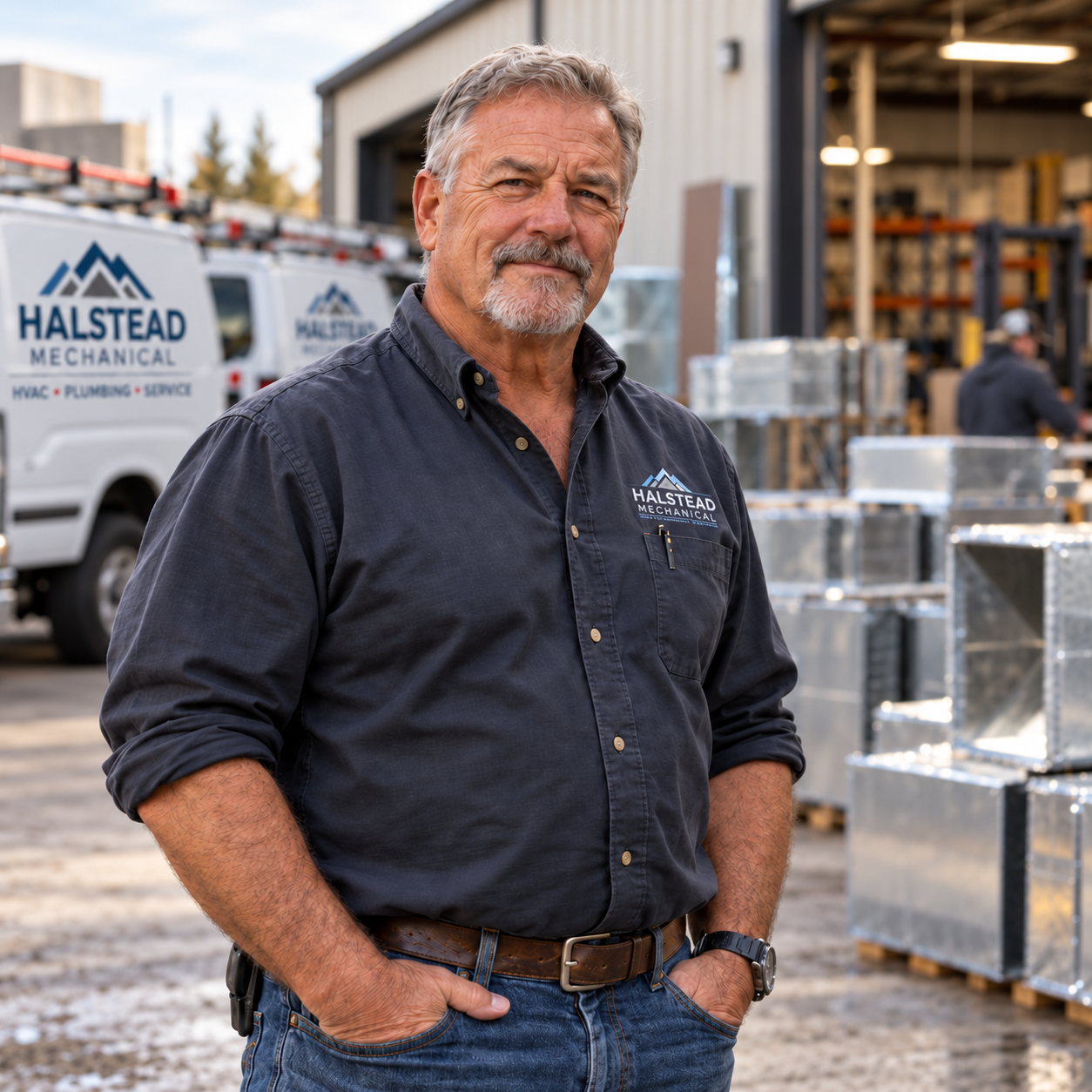
Halstead Mechanical Services is a 27-year-old commercial HVAC and mechanical contractor outside Nashville. It does about $21.4 million in revenue with 118 people. Nearly half of that revenue is service work, under 337 agreements that renew at roughly 91%.
The founder, Ray Halstead, stepped back from daily operations about five years ago. A President and COO with nine years at the company runs the business day to day. He plans to support a 12 to 24 month transition.
This is the profile most buyers hope to find: an owner who already got out of the middle.
Looking at a target like this?
See what Protective Ascent tests
THE PATTERN
The claim that the business runs without the owner is true. It was tested against his absence, and it held.
It was not tested against the absence of the person it now runs through. Halstead drew the line himself:
"The machine runs without me. What runs through me is the relationship layer and the judgment on the big stuff."
Ray Halstead, CEO of Halstead Mechanical*
A buyer acquires the machine. Whether the relationship layer and the judgment come with it is a separate question, and it has more than one part.
THE TURN

On the leadership bench, he said:
"I built the bench to make the business sellable, not to make it inheritable."
On whether the handoff is clean:
"Understand that's my belief, not something I've proven."
Across the session and the retake, he stated each of these:
| What the seller stated | Where it goes |
|---|---|
| The business runs through the President and COO, and there is no one beneath her who could step into that seat. | Operational finding. |
| The leadership team has not been told a sale is being considered, so their willingness to stay under a new owner is untested. | Operational finding, and counterparty. |
| Two senior estimators hold the bid capacity. The read on which general contractors pay reliably sits with him and one manager, not in a system. | Operational finding. Knowledge transfer priority. |
| He could not answer whose credential qualifies the company's license. | Operational finding. Licensing requirements go to counsel. |
| The surety and banking relationships are twenty years personal to him, and his signature is on the guarantees. | Operational finding. Bonding and guarantee terms go to the buyer's financial advisors. |
| He does not know how much margin rides on manufacturer rebates tied to his own relationships. Whether the service agreements assign to a new owner is unproven. | Goes to Quality of Earnings and counsel. |
His closing note after the retake:
"I'd been scoring the business as I know it, not as it transfers."
And on what he took away:
"A license-qualifier question I can't answer tonight, a leadership conversation I've been hiding from, and a second-in-command who doesn't exist yet."
None of these makes Halstead a bad acquisition. Several are ordinary for a contractor this size. They do tell a buyer which people have to stay, which relationships have to be re-earned, and which questions need an answer from a specialist before the buyer relies on the service book.
Protective Ascent does not interpret licensing law, size the bonding line, or normalize the margin. It identifies where continuity depends on a person and hands the specialist questions to the people who own them.
Want this before your LOI?
See how Protective Ascent works
WHAT IS NEXT?
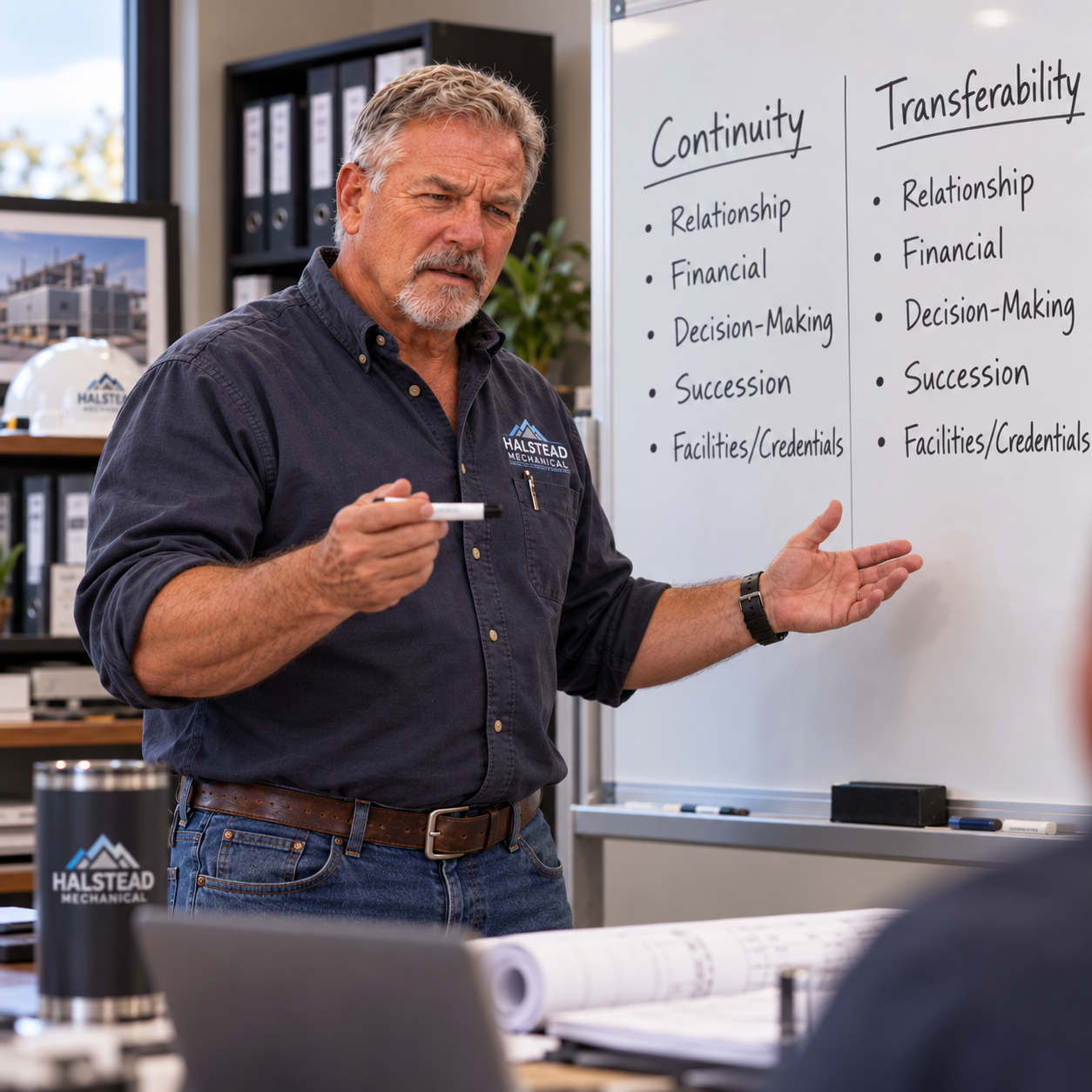
If the owner of your target has already stepped back, find out who the business runs through now.
Protective Ascent is a Buyer-side assessment of continuity and transferability before the LOI. It tests what appears capable of transferring, what still depends on the Seller or others, and what deserves another look before you rely on it.
EVALUATE A TARGET YOU'RE PURSUING* This is an illustrative scenario built from a Protective Ascent hot seat simulation. The business, the people and the figures are fictional. Seller statements are taken from the simulated session and retake.